Journey Mapping

5hr workshop to creating
seamless experiences

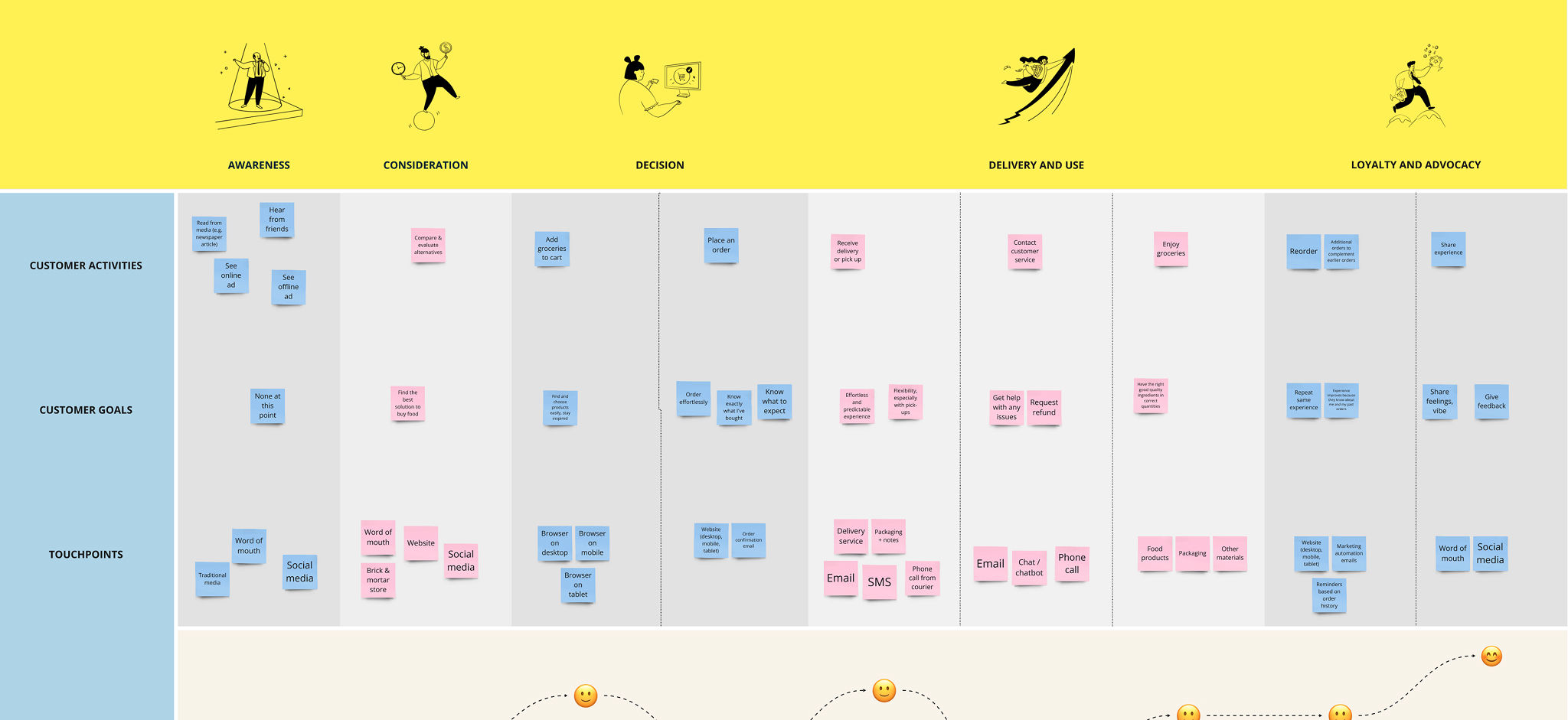
Journey mapping is the process of outlining the end-to-end experience a customer has with a company and can help - 

01

Identify barriers

Identify friction points in the customer experience

02

Service improvement

Improve customer satisfaction and retention

02

Focussed goals

Align teams around the customer’s needs

03

Learning to grow

Drive business growth by optimising touchpoints

Mapping reality, not assumptions - 5 hours

Spot the gaps that are silently costing you users, revenue, and goodwill. Turn guesswork into clarity about what customers need at each step. 

Key steps

“See where customers get confused, drop off, or lose trust and what to fix first.”

1

Clarify the impact you’re trying to achieve

👉 Example - A community organisation may want to understand why people stop engaging after their first workshop or referral. The goal could be to improve attendance, trust, or follow-through rather than raw “conversion”. Focus on - 

Who you are trying to help
What behaviour you want to support or change
Where people are currently dropping out
2

Learn from real service user experiences

👉 Example - A charity might review enquiry emails, helpline logs, referral forms, and informal staff feedback, then combine this with short conversations with service users or volunteers to understand confusion, fear, or barriers. This step helps you -

- Surface hidden frustrations
Understand emotional and practical barriers
Separate assumptions from lived experience
3

Understand different types of service users

👉 Example - A support organisation may work with multiple groups, such as -

First-time users – unsure, anxious, and unfamiliar with support systems
Repeat users – more confident but often time-poor or overwhelmed

The aim is not to stereotype, but to recognise that different people need different levels of clarity, reassurance, and support.
4

Map every interaction that shapes trust

👉 Example - A charity reviewing its referral or support journey might list touchpoints such as -

Hearing about the service through a council, school, GP, or community group
Visiting the website or reading a leaflet
Making first contact via phone, WhatsApp, or email
Completing a form or eligibility check
Waiting for a response or follow-up
Receiving support or being signposted elsewhere

This makes visible where trust is built, lost, or strained.
5

Understand how people feel at each step

👉 Example - A voluntary organisation may find that people feel -

- Anxious or unsure before first contact
Relieved when they speak to a real person
Frustrated during long waits or unclear processes
Supported and respected when communication is clear and timely

This helps teams design services that reduce stress, not just friction.
6

Identify barriers, risks, and opportunities to improve access

👉 Example - A charity might notice that long forms, repeated questions, or delayed responses discourage people from continuing, especially those with language barriers, low digital confidence, or limited time. This step highlights -

Where people drop out or disengage
Safeguarding and inclusion risks
Practical changes that make services easier to access
7

Improve the journey in small, realistic steps

👉 Example - Instead of launching big changes, an organisation may test small improvements, such as clearer confirmation messages, faster follow-ups, or alternative contact options, then check whether these reduce confusion or missed appointments.

The goal is continuous improvement within real-world constraints.
Ready to
get started?

We’ll work with you to map the real experience of your service users - you’ll leave knowing where trust is built, where it breaks, and what small changes will make the biggest difference.

£650  £1450